What is Bibimbap?
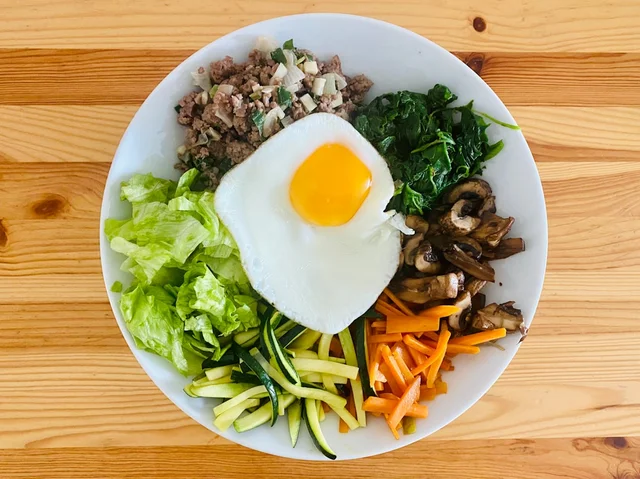
Bibimbap is a quintessential Korean nutritious meal consisting of warm rice topped with various seasoned vegetables (namul), meat, and gochujang (red chili paste). It embodies the traditional Korean philosophy of the five cardinal colors (obangsaek), making it visually appealing and globally beloved as a healthy meal that balances protein and dietary fiber.
Nutritional Composition of Bibimbap
- Carbohydrates: Steamed white or multigrain rice serves as the foundation, providing energy.
- Dietary Fiber: Seasonal vegetables like bellflower root, bracken fern, and spinach provide abundant vitamins.
- Protein: Stir-fried beef or a fried egg provides essential amino acids.
- Fermented Food: Gochujang contains capsaicin from chili peppers and beneficial bacteria created during the fermentation process.
Historical Background and Cultural Significance
There are several theories regarding the origin of bibimbap: one suggests it began during busy farming seasons when people needed a simple meal to share, while another claims it originated from royal court banquets where leftovers were mixed together. Ingredients vary slightly by region, with famous variations like Jeonju Bibimbap or Jinju Bibimbap utilizing local specialties. For Koreans, this dish is more than just a meal; it is a cultural icon symbolizing the values of harmony and unity. The process of preparing each ingredient separately and mixing them with care showcases the essence of Korean cuisine.